Business
From Pallets to Pay Slips: Türkiye’s Warehouse Salaries Right Now

Conveyor belts hum steadily, delivery vans line up in perfect rhythm, and digital scanners blink like city lights in motion. It’s not just noise; it’s the sound of an economy pulse that runs on precision. Warehousing has quietly become one of Türkiye’s most powerful job engines, connecting factories, online stores, and export hubs in one continuous flow.
Over the last few years, Türkiye’s logistics sector has transformed from a supporting act into a main stage for employment. E-commerce, retail, and manufacturing now rely on it completely. Every package shipped adds another layer of demand for skilled, reliable workers. As warehouses continue to grow across Istanbul, Izmir, and Ankara, competition for talent has intensified. Employers are being pushed to rethink how they attract, train, and retain their people.
At the same time, the role of a warehouse worker has evolved dramatically. In 2025, it’s no longer about heavy lifting alone, it’s about managing the machinery, software, and systems that keep Türkiye’s supply chain moving. Workers aren’t just part of the process; they are the process.
Therefore, as wages shift and automation takes hold, pay transparency has never mattered more. Understanding how compensation is changing helps HR leaders stay competitive, while giving workers the clarity they need to plan their next move in an industry that’s growing faster than almost any other.
Why Warehouse Jobs Are in the Spotlight
Türkiye’s logistics and warehousing industry has grown fast, and it’s not slowing down anytime soon. According to the Ministry of Industry and Technology, logistics contributes nearly 12% of national GDP, while warehouse employment has doubled in major cities over the past decade. The country’s location between Europe, Asia, and the Middle East has made it a critical trade gateway, and that’s fueling even more demand.
At the same time, the rise of e-commerce has completely reshaped how warehouses operate. Online order volumes have surged by more than 50% since 2020, driven by platforms like Trendyol, Hepsiburada, and Amazon Türkiye. As a result, companies are racing to expand distribution hubs across Istanbul, Ankara, Izmir, and Bursa to keep up with both domestic and international demand. Every new fulfillment center means hundreds of new hires, tighter deadlines, and a growing need for efficiency at scale.
However, the transformation isn’t just about expansion, it’s also about sophistication. Modern warehouses no longer rely solely on physical endurance; they now depend heavily on digital precision. From barcode scanners and handheld devices to AI-driven routing systems and real-time inventory dashboards, operations have become smarter and faster.
Consequently, the profile of the average warehouse worker is changing. Roles that once demanded manual precision now require tech fluency, problem-solving skills, and the ability to adapt to smart systems. As companies modernize, pay structures are evolving too, rewarding workers who can bridge the gap between physical speed and digital accuracy.
In short, Türkiye’s warehouse boom isn’t just an economic trend, it’s a technological revolution in motion.
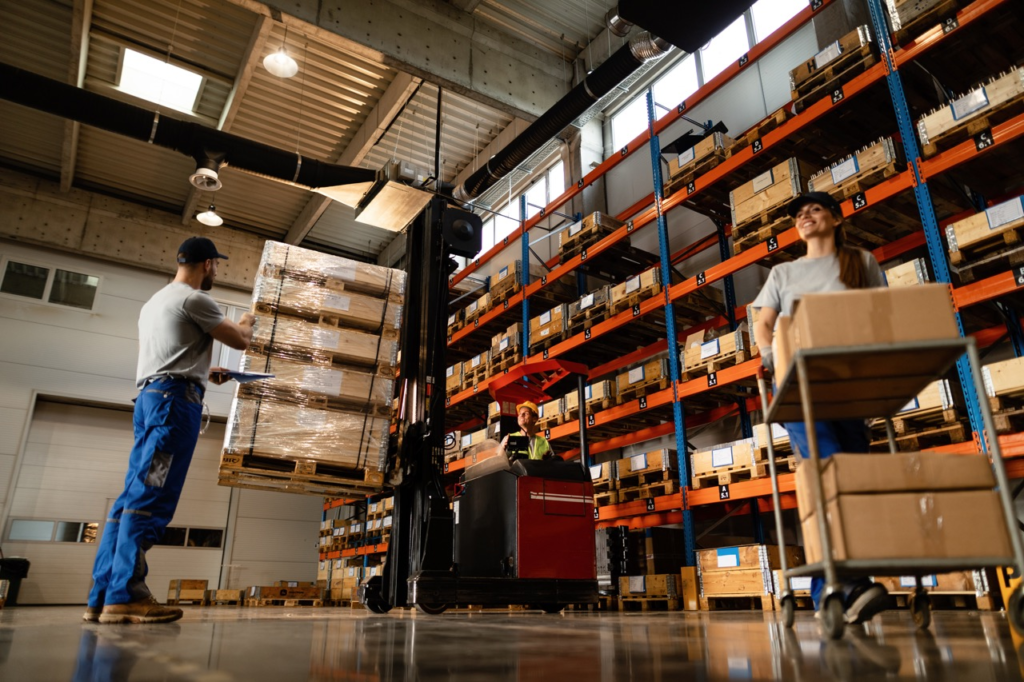
Average Warehouse Salaries in 2025
So, what does the payslip look like?
Warehouse salaries in Türkiye have climbed steadily alongside inflation and digital transformation:
- Entry-level packers and sorters earn between ₺22,000 and ₺28,000 per month, depending on region and contract type.
- Experienced forklift operators pull in ₺26,000 to ₺34,000, with many earning overtime and night-shift premiums that can push take-home pay higher.
- Supervisors or shift leads command ₺36,000 to ₺45,000, often with added benefits like transport, meal cards, and performance bonuses.
In Istanbul and Ankara, warehouses attached to global e-commerce giants (think Trendyol, Amazon Türkiye, Hepsiburada) typically offer 10-15% higher pay than regional averages. Meanwhile, smaller logistics centers in Anatolia still rely heavily on bonus structures tied to attendance and shift completion.
Factors That Influence Warehouse Salaries
When it comes to warehouse salaries in Türkiye, the differences aren’t random. Even when two workers share the same title, their monthly take-home can vary dramatically depending on a few key factors. Understanding these can help both HR teams and jobseekers make smarter decisions in 2025’s competitive logistics market.
Here’s what really drives the gap:
- Region:
Paychecks stretch further depending on where you work. Istanbul, Izmir, and Kocaeli consistently offer higher wages to match the higher cost of living and intense demand. In contrast, rural logistics hubs or smaller industrial towns trail behind by about ₺2,000-₺4,000 per month. As Türkiye’s supply chains expand inland, this gap is expected to narrow, but for now, the cities lead the race. - Skill and Certification:
Forklift licenses, OSGB safety training, or experience with warehouse management software can raise wages by up to 20%. Employers increasingly value workers who can handle multiple roles, follow safety protocols, and adapt quickly to new systems, especially in high-volume e-commerce facilities. - Industry Type:
Retail and FMCG warehouses typically operate with tighter margins, which limits wage growth. On the other hand, manufacturing-linked or export-driven warehouses offer more predictable shifts, better overtime rates, and stronger job security. - Tech Readiness:
Workers who know their way around automation platforms or digital picking systems, like SAP EWM or Oracle WMS, are now the elite tier of warehouse labor. Their ability to combine physical speed with tech fluency puts them in a pay bracket all their own.
Together, these factors shape how warehouse pay evolves, and who earns the most in Türkiye’s fast-moving logistics landscape.
Comparing Türkiye’s Warehouse SalariesWarehouse Salaries with Other Markets
Here’s where things get interesting. Türkiye’s warehouse labor remains highly cost-effective compared to regional competitors:
- Türkiye: ₺25,000-₺34,000 average (~USD 830-1,130)
- Poland: ~USD 1,400=1,800/month
- Romania: ~USD 1,200-1,500/month
- Morocco: ~USD 600-900/month
- UAE: ~USD 1,600-2,000/month (but with housing benefits)
So, while Türkiye isn’t the cheapest option, it strikes a strong balance between cost, skill, and infrastructure. Add its proximity to Europe, multilingual labor, and resilient supply chain networks, and you’ve got a warehouse market that’s as strategic as it is affordable.
What’s next?
The next phase of warehouse work in Türkiye won’t just be about speed, it’ll be about smarts. Automation and AI are already reshaping how shifts are planned, orders are picked, and routes are optimized. Companies investing in warehouse robotics report productivity gains of up to 20%, but that evolution also means traditional roles are morphing into hybrid “tech-collar” positions.
Inflation and currency swings will continue to pressure wages, yet employers who focus on retention through benefits, recognition, and clear growth paths will rise above the noise. The best warehouses are already doing this, turning pickers into supervisors and forklift drivers into maintenance techs, proving that a job can evolve into a career with the right investment.
For jobseekers, that’s a promising shift. For employers, it’s both a challenge and an opportunity waiting to be seized.
Because in 2025, Türkiye’s warehouse sector isn’t just about moving boxes, it’s about moving up. Visit our main channel for deeper insights on how Türkiye’s logistics workforce is redefining what modern blue-collar careers can look like.